this is not a drill
On Tyranny - Lesson 18
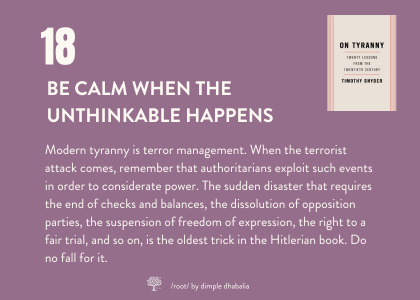
This essay is part of a 20-day project inspired by On Tyranny by Timothy Snyder.
A failed coup is usually practice for a successful one. The emergency might be more favorable next time, and we cannot afford to be surprised.
- Timothy Snyder | On Tyranny | Lesson 18
I’m not convinced we’re going to see free elections here at home in two years—maybe not even in four. I don’t say that to stir panic, but because I believe we need to be prepared. Since 2016, we’ve become a country of staged crises—one disaster after another, some real, some manufactured, all exploited to push people further into fear and division. The playbook isn’t new. It’s pulled straight from the pages of history, and we’re watching it unfold in real time: the dehumanization of immigrants and other historically underserved groups, the stacking of the judiciary with loyalists, the erosion of checks and balances, the illegal arrests of permanent residents and citizens for exercising their First Amendment rights.
This is the logic of shock and awe: sow chaos, instill fear, and watch people shrink silently into compliance. These moments are designed to scare us into keeping our heads down, mouths shut, and falling in line. But we can’t let our fear or our grief keep us standing by while 47 and his regime destroy our institutions and crush our collective spirit.
This is exactly the moment when moral courage matters most. And moral courage is made of many things: integrity, empathy, discernment, and endurance. It requires a steady commitment to truth, and a belief in the dignity of all people. To be clear—moral courage isn’t the absence of fear. It’s the choice to stand up in spite of it. We’re allowed to be scared. We must grieve. But we also have to find a way to be with those emotions and still be brave enough to keep showing up to defend what we know is right.
In times like these, it’s not enough to just “take care of ourselves.” We have to be intentional about soothing our nervous systems so we can stay clear-headed and grounded. That happens through self-care, yes—but more importantly, through collective care. Mutual aid, shared meals, walking in the woods with a friend, singing, writing, organizing—these aren’t moments of casual socializing. They’re survival strategies.
We can look to history and see that our ancestors have been here before. Many survived the worst—wars, coups, occupations, slavery, genocide—but many didn’t, because too many people stayed silent or looked away. We have the benefit of learning from their experiences. Practicing moral courage means leaning into each other to foster hope and care, and resisting in both big and small ways by refusing to forget our own humanity—and the humanity of those being targeted.
And while this moment feels horrific, and often impossible, we have to remember that it’s not permanent. Authoritarian regimes never last forever. Eventually, moral courage triumphs. But we have to be patient. We have to dig in for the fight. We have to resist—not just when it’s trending or when we feel strong, but especially when it’s hard, and quiet, and no one’s watching.
As much as many of us would like to stick our heads in the sand until it’s all over, that’s not an option. The unthinkable isn’t some far-off possibility—it’s already here. This is not a drill. And when the next shock wave comes, we must be prepared—not surprised. We have to keep reminding ourselves that we have power in numbers. We have power in love. And we have a responsibility to each other to stand firm, stay grounded, and hold on—for ourselves, for our communities, and for a future that’s still worth fighting for.
check out other essays in this series . . .