
holding the darkness and beauty of life on this spaceship called earth
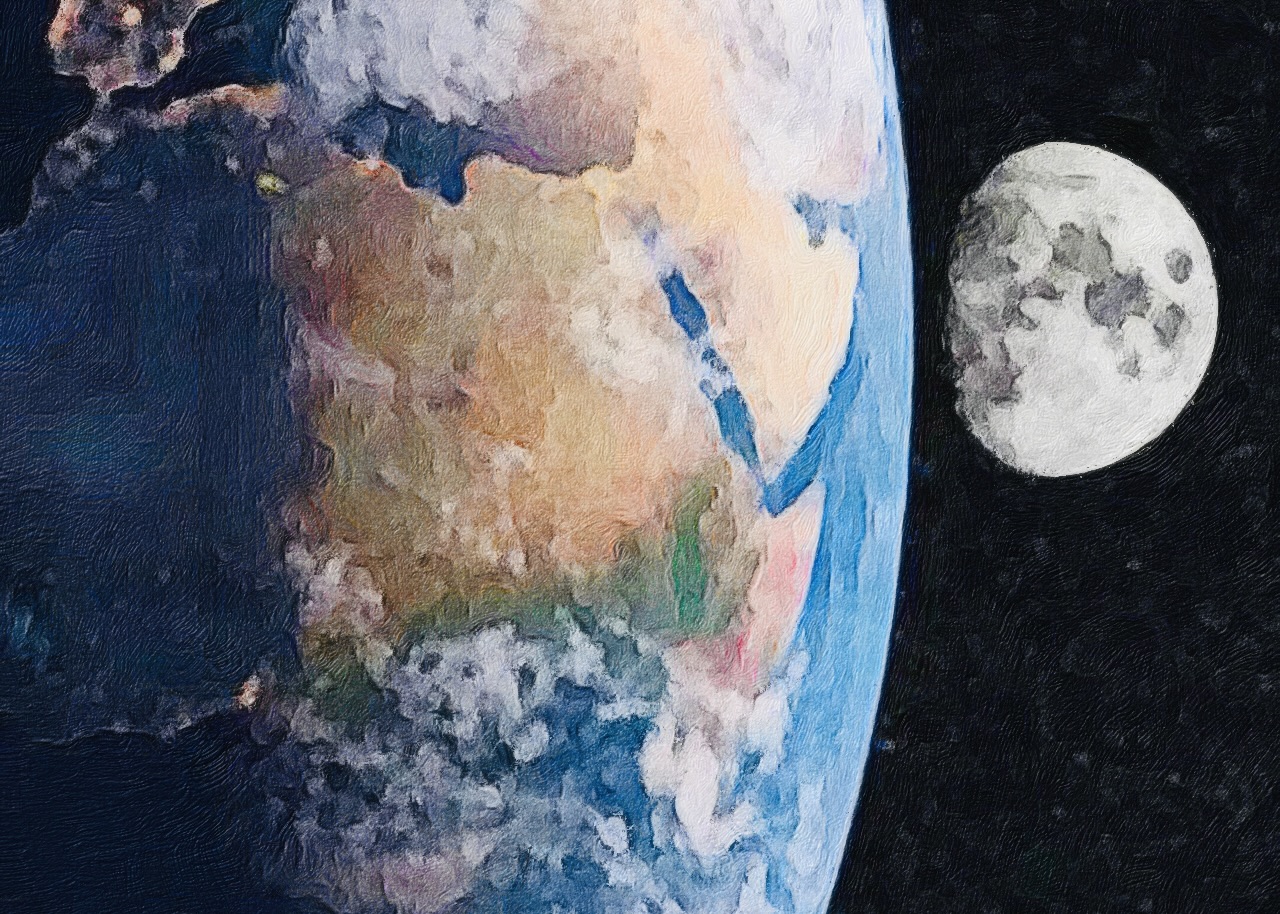
As we prepare for the Artemis II crew to splash down, I’ve been reflecting on this past week, as my social media feed was filled with videos of their adventures.
I felt the warmth of joy rise up through my body as I watched them take in the beauty of the cosmos from a vantage point most of us will never experience. I laughed as a Nutella jar floated by the camera as the astronauts worked, and I bopped along to the playlist of songs that NASA has been using to wake the crew up each day. I teared up when I heard Mission Control respond to the crew's first description of the moon with: “Copy, moon joy.” It felt like they’d given me a name for the feeling I'd been carrying for days.
And just as my body began to relax into a feeling of safety and joy it hasn’t felt in a long time, the familiar coil of anxiety reappeared in the pit of my stomach, pulling me back into a reality with a presidential threat of genocide against an entire people.
This is the moral whiplash of our time.
For me, the transmissions back to Earth from the Artemis II crew have felt less like mission updates and more like dispatches from a different kind of consciousness. Four humans – poet-philosophers – bearing witness to one world in a capsule they named Integrity. The awe in their voices. The lyricism of how they described our world — whole, the entire globe visible from pole to pole. No borders. No flags. From thousands of miles away, Victor Glover looked back at us and said: “Trust us, you look amazing, you look beautiful. And from up here you also look like one thing. We’re all one people.” When Merriam-Webster asked the crew what words come to mind to describe their journey, Christina Koch said there was really only one that captured it: humility.
I’ve been trying to reconcile the astronauts’ observations with a reality down here on Earth that is a lot less beautiful. Where the same government that sent these amazing people out to explore the universe, not only lacks integrity, but also basic decency as they do everything possible to ensure that the world knows they do not believe that we are in fact all one people. Where humility no longer feels like part of our collective lexicon. Where we have, at our best, reached toward freedom and dignity for all, we now see dehumanization and othering spreading like wildfire, immigrants being vilified and disappeared, and empathy weaponized by those who fear irrelevance. The distance between our capacity for greatness and what many in this country are choosing instead feels, some days, impossible to bridge.
After breaking the record for the farthest any humans have ever been from Earth, the crew asked Mission Control to allow them to name an unnamed crater after Commander Wiseman’s wife Carroll, a NICU nurse who died of cancer in 2020. Mission Specialist Jeremy Hansen called it “a bright spot on the moon.” As his words landed, thick with emotion, the crew held each other and wept, their grief palpable six years later and from thousands of miles away. Back here on Earth many of us were moved by this remarkable act of love that will forever tie Carroll to this extraordinary mission and to the moon.
At times it felt like their love for each other and for us was too much and we’d come undone from the goodness of it all. But then, we’d step back and find ourselves still here, holding pure love alongside everything else. Our grief. Our loneliness. Our disconnection. This is what moral imagination looks like in practice — not a concept, not a framework, but the refusal to let the grief cancel out the wonder, or the wonder erase the grief. Moral imagination is at the heart of my work, and this week, like so many of you, I got to experience it in real time.
On the same Easter morning that the president posted an expletive-laden threat to Iran, Victor Glover reminded us that we may think they’re on a spaceship doing something extraordinary, but we’re on a spaceship too, “a spaceship called Earth that was created to give us a place to live in the universe and the cosmos.” It was a beautiful reminder that even in the whiplash of this moment, we also carry the capacity to hope. To find our own bright spots here on Earth.
The Artemis team’s joy inspired me to make a bouquet of flowers - a bright and cheerful pop of color in what has felt like a long stretch of gray. I shared a picture of it with my community online, and what came back buoyed me. People responded with stories about the meals they were cooking and sharing with others, and pictures of walks they were taking in nature – the joy they were finding in the small everyday rituals of normalcy in circumstances that are anything but. These weren’t messages of toxic positivity or escapism. Nobody was pretending that life isn’t hard. They were choices – the stubborn, quiet insistence that we have the capacity to hold both the darkness and the beauty of life on this spaceship called Earth.
one last thing
become a founding member
Join as a founding member of rōot | by dimple dhabalia at $100/year and get unlimited access to all rōot circles, the full member library of downloadable integration guides, videos, and toolkits, and a 15% discount on other offerings — plus a signed copy of Tell Me My Story — Challenging the Narrative of Service Before Self.
Written by

subscribe
subscribe to receive new pieces as they're written







Member discussion