
the body knows what our feed makes us forget
/rōot/ awakenings post # 17 - on doomscrolling, vicarious trauma, and remembering what restores us
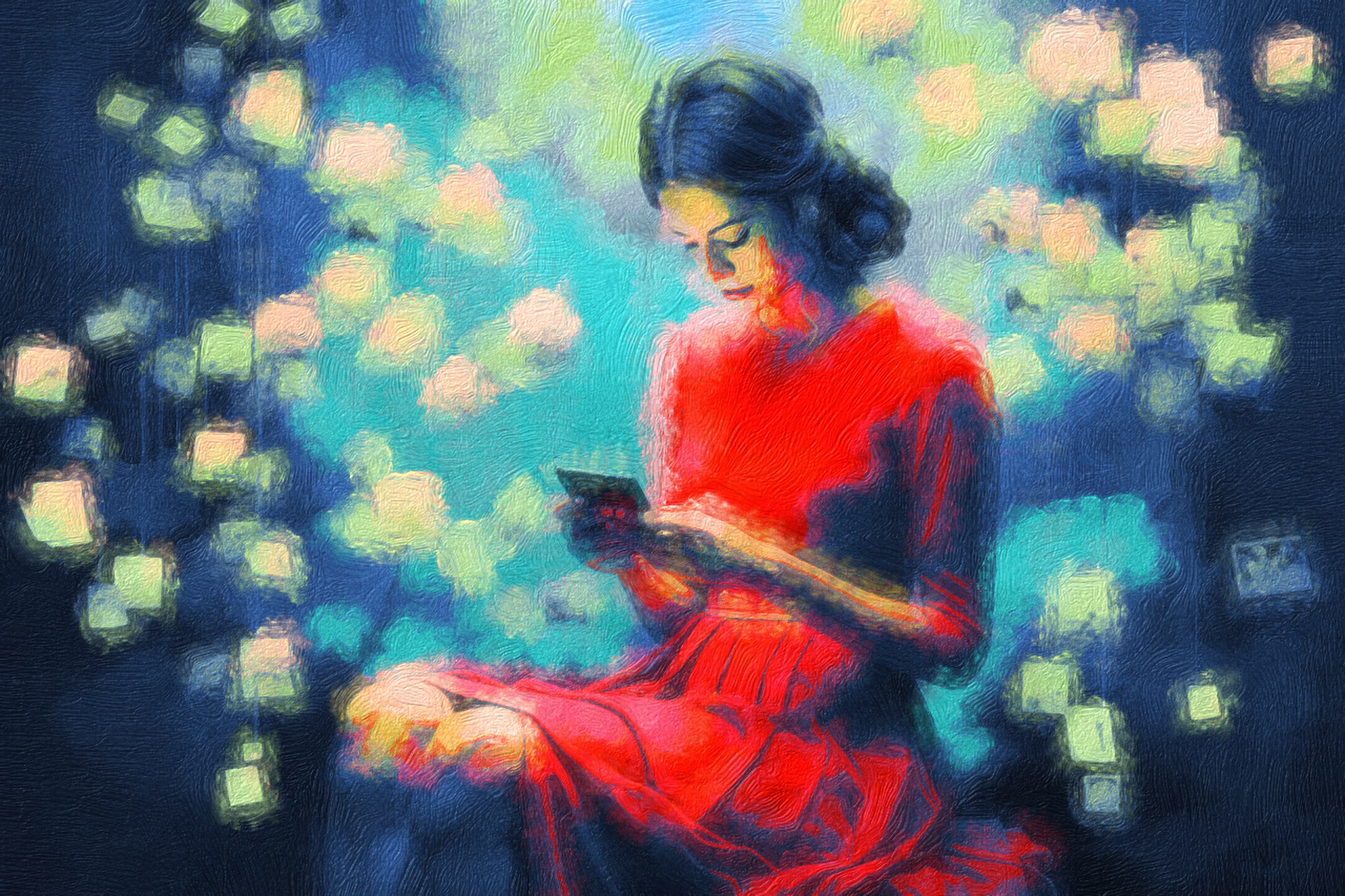
There was a time when the phrase “vicarious trauma” came up in conversations about therapists, aid workers, medical professionals, social workers, first responders—people who regularly bore witness to the pain and suffering of others. We didn’t need to live through the traumatic event to be marked by it because our nervous system isn’t set up to make that kind of distinction.
But these days, we’re all bearing witness. Not just those working on the frontlines supporting vulnerable people—but all of us. In our beds. On our couches. Between emails and errands. The atrocities that once felt safely distant, confined to news segments from faraway countries, are now unfolding here—on our soil. In our schools. In our workplaces. In our communities. In our backyards. In a country that once claimed to be the standard bearer for freedom, security, and moral courage.
And we’re witnessing it all unfold in real time.
The endless scroll of violence and grief has become the backdrop to daily life. All of it—there, and here—demands our attention. And all of it is being delivered to us through the same unrelenting stream. It starts with a quick check-in. A glance at the headlines. You just want to stay informed. You just want to care.
And then suddenly—
You’re flipping through headlines—each one more disconcerting than the last.
You’re watching footage of brutality with no warning.
You’re reading a thread about someone who’s just been disappeared.
You’re staring at your screen, and suddenly realize—you’ve been holding your breath.
And still—scrolling.
Doomscrolling has become the ritual of our time. But what starts as bearing witness to the pain and suffering of others often morphs into something else. Saturation. Desensitization. Numbness. Guilt. Collapse.
Sometimes I catch myself doing it, knowing I’ve just seen something heartbreaking—but all I feel is a dull, heavy blankness. A quiet dissociation. And then—without warning—something ruptures me.
In the past couple of weeks it has included images of Venezuelans with shaved heads, dressed in sterile white, chained and shackled. A grainy video of students being snatched off the streets by law enforcement, faces covered, bodies dragged into unmarked vans. Headlines about people who dared to speak out—now detained, disappeared, erased. Articles about the abhorrent conditions in immigrant detention facilities. The large-scale attempt at erasure of entire groups of people, their art, their stories, their wisdom—anything that threatens the ideology of the regime.
And suddenly, I can’t breathe.
This isn’t just sadness. It’s something deeper. This is what vicarious trauma feels like. It doesn’t require direct exposure. You don’t need to be at the scene of violence to be impacted by it. It’s about carrying stories we may not have personally lived but can’t unsee. It’s about witnessing, again and again, without relief—without the time or space to process—the rage and grief that comes from helplessly watching the persecution and torture of innocent people.
It means acknowledging the fear that we might be next.
And sometimes, contending with the shame—or the quiet guilt—of believing that if we keep our heads down and stay quiet, we’ll probably be alright.
Our nervous system doesn’t care whether we were there in person or there through our feed. It doesn’t care if we spoke out or stayed silent. The result is the same: a body flooded with stress hormones, a mind spinning, a heart racing and quietly breaking beneath the surface.
And yet—this pain isn’t a sign of weakness.
It’s proof of our humanity.
A reminder that we’re still capable of feeling, even in a world trying to make us forget how.
And we don’t have to carry it alone.
Vicarious trauma isolates us—but healing begins in connection. When we speak the weight of what we’ve seen aloud, when we name the ache we’ve absorbed, something begins to shift. Shame softens. Breath returns. We remember we’re not the only ones awake and overwhelmed and trying to stay human in a breaking world.
This is why we need one another.
Why we must share what we’re holding with people who can hold it with us.
Why voice, community, and care are part of the repair.
And it’s also why we have to step away sometimes—not to disconnect, but to remember what we’re connected to.
The body knows what our feed makes us forget. That we’re part of something older, wiser, and more alive than the algorithm. When the weight of the world becomes too much, the Earth becomes a place of return. A relationship. A rhythm. A reminder.
Put the phone down.
Go outside.
Look up.
Take a deep breath and let the fresh air fill your lungs.
Let the sky pull you into perspective.
Let the trees remind you how to root.
We were never meant to metabolize this much pain through a screen. We need earth. We need breath. We need moments of stillness to remember we are part of something bigger than the algorithm’s feed of horror and despair.
Stepping away—not forever, but for now—is not indulgent. It’s necessary.
It’s how we come back to ourselves, so we can come back to the world.
Not numbed out. Not broken. But restored enough to keep showing up.
Because we’re going to have to keep showing up. Again and again.
And we need to do it with strength, softness, and our full humanity intact.
a compassionate reframe
We’re not too sensitive. We’re not overreacting. We’re not broken. We’re alive to what’s happening—still connected to what’s real. That isn’t our weakness—it’s our wisdom. Stepping away from the scroll isn’t disengagement—it’s a return. A return to what is steady, sacred, and alive. A space for repair. A space where the Earth, our breath, and our shared humanity can begin to restore what the world has worn down—so we can come back to the work of care and resistance, not numb, but rooted.
reflection prompts
As we reckon with how social media and technology shape our collective grief and overwhelm, I invite you to pause and reflect:
- What does doomscrolling feel like in your body? What sensations or signals let you know you’ve reached your limit?
- Have you felt guilty for needing space from the pain of the world? What would it feel like to give yourself permission to pause without shame?
- Is there one image or headline you can’t seem to unsee? What does it need from you—witness, breath, grief, ritual, action, release?
- What might it look like to set a boundary not to disconnect, but to stay connected to yourself?
- Who or what reminds you that your tenderness is a strength, not a liability?
one final thought
The world is loud with suffering. But we don’t have to carry it all at once. We can pause without turning away. We can grieve without being consumed. We can still care—with a nervous system intact, a heart protected, and our humanity intact.
Turn to the Earth to tend to the invisible wounds.
And remember—you are not alone in this ache.
Written by

subscribe
subscribe to receive new pieces as they're written





Member discussion