
how leading with hopeful action can transform moral injury into meaningful change
the /rōoted/ leader #24 - on defiance, courage, and integrity in leadership
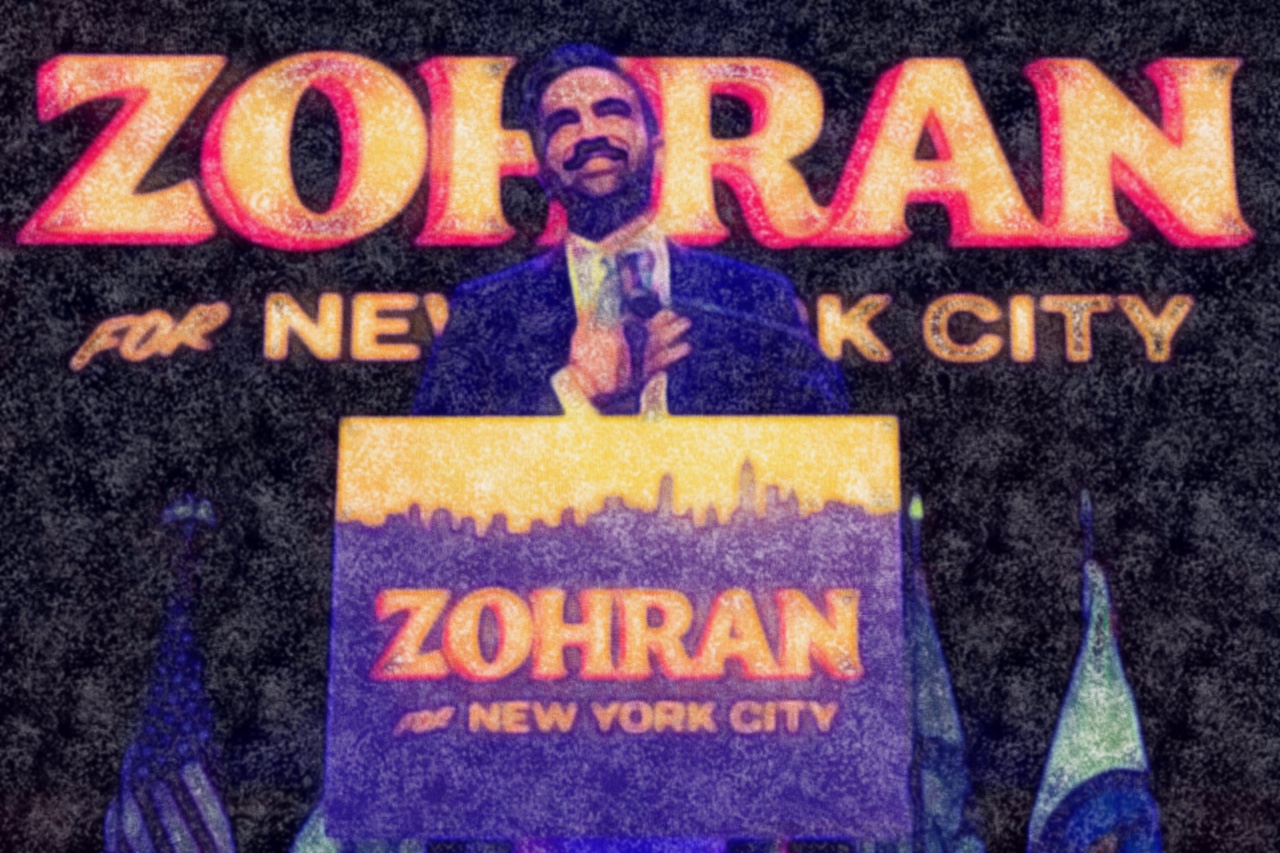
When Zohran Mamdani won the New York City mayoral race on Tuesday night, my entire social media feed erupted—not with performative celebration, but with something many of us haven’t seen or felt in a while: genuine, embodied hope.
And it wasn’t just New Yorkers.
This feeling of hope resonated far beyond the five boroughs because what Mamdani’s victory represents transcends municipal politics. In a moment when so many of us are navigating institutional betrayal and moral injury at a national and global scale, his victory shows us that leading with hopeful action—as an ongoing practice rather than a single dramatic gesture—can transform moral injury into meaningful change, not just in politics, but in any space where we lead.
stepping out of line
One of the first things we’re taught to do as children is stand in line. In the hallway at school. Waiting for the bus. In the cafeteria. On the playground. At the grocery store. And long after we’re out of school, we keep doing it, because along the way we’ve learned that when we stand in line and comply, we’re rewarded—we’re made to feel safe, we’re told we’re good—as long as we don’t question authority, or disrupt the status quo, or defy those with power, or speak up, or step out of line.
Which is why, when we think about practicing moral courage—stepping out of line— our minds often jump to the big, iconic moments. Tank Man standing in front of a column of military vehicles in Tiananmen Square. Iesha Evans in her flowing dress facing down riot police in Baton Rouge. And of course, the woman in the blue polka dot dress blocking armored vehicles during an ICE raid in New York. These types of images get seared into our collective memory as examples of bravery to which we should all aspire.
But moral courage doesn’t always look like standing in front of tanks or armored vehicles. It looks like stepping out of line. Speaking up. Refusing to accept the status quo when it harms people. And Mamdani’s campaign offered a masterclass in moral courage.
Over the course of his campaign and beyond, this looked like many things: openly speaking about Gaza when others stayed silent. Standing with the trans community without hedging. Centering rather than apologizing for his South-Asian, East African, and Muslim identity. He ate with his hands at community events. He spoke in Urdu, Punjabi, Gujarati, and Arabic. He danced like no one was watching. And what was most notable was that none of it felt performative because it wasn’t performance. It was him, refusing to compromise his values, regardless of the cost. As he noted last night, “I am young, despite my best efforts to grow older. I am Muslim. I am a democratic socialist. And most damning of all, I refuse to apologize for any of this.”
His campaign was built on the strength of immigrant communities—particularly South Asian, Arab, African, and Latino New Yorkers who had been systematically excluded from political power. He organized in languages the political establishment couldn’t speak, in neighborhoods they’d long ignored, proving that when those who’ve been told they don’t belong come together, they can build the power to reshape the very systems that have excluded them.
We need more leaders like this.
But here’s the thing, we can’t be waiting for them. We need to become them—in our organizations, our communities, our movements, our families. And moral courage looks different for each of us because the risks we face when we speak up or take action are directly tied to the privilege we hold—or don’t.
For those who hold privilege—whether through race, class, gender, citizenship status, ability, position, education, or any other factor—the risk when we speak up is more likely to be tied to comfort, to being liked, or to keeping our “good person” identity intact. Sure, we might make people uncomfortable and some might disagree with us, but we’re less likely to lose our safety, livelihood, or freedom. Unfortunately, this isn’t the case for everyone.
For Black, Brown, Indigenous, queer, trans, immigrant, disabled, and other historically marginalized bodies, the calculation is fundamentally different. The risk for people in these groups is often tied directly to their survival, safety, livelihood, and freedom. A powerful example of this is how the current regime has threatened to strip Mamdani of his citizenship and deport him. Using our privilege to shield those who face greater consequences isn’t just important. It’s what ensures risk is more equitably distributed so fewer people have to choose between survival and integrity.
In practice, moral courage for most leaders isn’t flashy and doesn’t have to be high stakes. It looks like asking the questions nobody else is willing to ask. Opening our offices for anyone who needs a moment to breathe. Fostering empathy, connection, and care inside systems that have historically prioritized productivity and profit over people. Supporting mutual aid networks. Leaning into uncomfortable conversations. Amplifying those who are speaking out on social media. Demanding accountability from our organizations. Refusing to let comfort dictate our choices.
And it’s about doing all of this in community, because when we see others practicing courage, we start to believe we can too.
Mirror neurons in our brains make courage contagious, so when enough people choose courage over compliance, it becomes a collective practice. As Mamdani put it: “Together, we will usher in a generation of change. And if we embrace this brave new course, rather than fleeing from it, we can respond to oligarchy and authoritarianism with the strength it fears, not the appeasement it craves.”
This kind of rooted integrity in ourselves, and in our leaders, matters now more than ever when so many of us are navigating institutional betrayal and moral injury. The gap between our own values and our leaders’ actions has grown so wide that moral injury has become endemic. But let’s be clear, the systems that are causing us harm are functioning exactly as they were designed to—to exclude, extract, and dehumanize. And what many of us are feeling is the weight of being asked to operate within these systems or look the other way as if nothing is wrong. Practicing integrity—even in small, everyday moments—creates a pathway through this moral injury. When we choose alignment with our values over compliance with systems designed to harm, we’re not just resisting the injury, we’re actively creating pathways towards healing from it.
When leaders like Mamdani openly practice integrity and demonstrate what it looks like to stay rooted in their values in the face of adversity, it isn’t just powerful, it’s proof that integrity isn’t a liability in leadership-–it’s a strategy for collective liberation. It reminds us that we don’t have to contort ourselves into who systems designed to benefit the few over the many say we should be. That defiance isn’t dangerous rebellion—it’s being in alignment with our values and rooting in integrity and moral courage in the face of adversity, uncertainty, and hardship.
But as powerful as it is, moral courage alone isn’t enough—especially in the face of the institutional betrayal and moral injury we’re navigating. This is where moral imagination comes in.
holding pain and possibility
We live and lead in cultures steeped in binary thinking that ask us to choose: good or bad. Light or dark. Hope or despair. But moral imagination says both can be true at the same time. That we can acknowledge the pain of systemic harm and maintain our capacity to envision something better. This is what made Mamdani’s campaign different. He didn’t minimize the reality facing New Yorkers—the affordability crisis, the broken promises, the institutional betrayals. But he also didn’t stop there. He painted a vivid picture of something better—something hopeful. His vision wasn’t just wishful thinking, it was a blueprint of what could be built together.
In his victory speech he proclaimed that, “This will be an age where New Yorkers expect from their leaders a bold vision of what we will achieve, rather than a list of excuses for what we are too timid to attempt.” In response the assembled crowd broke into cheers because his words challenged decades of political messaging and narratives that have conditioned us to accept incrementalism as the standard, and celebrate leaders for not making things worse rather than actually making them better. Those in power have been lowering our expectations so consistently over the years that demanding more feels radical.
Moral imagination challenges this conditioning. It insists that we deserve more and better, and that even in the face of pain and suffering, we have the capacity to create more and better—especially when we do so together. Moral imagination is an important component because without the ability to imagine alternatives, we can’t create them. This capacity to hold pain and possibility together—to acknowledge the reality of moral injury while maintaining vision for something better—is how we break through rather than break down. It’s what transforms survival into resistance, and resistance into transformation.
harnessing the power of the collective
The other aspect of Mamdani’s victory that felt different from what we’ve seen over the past decade is this: He didn’t center himself in it.
Every “I” in his speech was followed by a “we.” Every achievement was framed as a collective win. When he spoke about his key policy initiatives, he had the crowd chant the commitments, too. Not to him. With him.
“Together, New York, we’re going to freeze the…” [rent!]
“Together, New York, we’re going to make buses fast and…” [free!]
“Together, New York, we’re going to deliver universal…” [child care!]
This matters because it fundamentally challenges another narrative we’ve inherited about how change happens. That we’re helpless and need to wait for the right hero, the perfect leader, the most charismatic speaker. And most damaging: that change comes from individual greatness rather than collective power. But as Mamdani made clear: “We won because New Yorkers allowed themselves to hope that the impossible could be made possible. And we won because we insisted that no longer would politics be something that is done to us. Now, it is something that we do.” [emphasis added]
This shift from individual to collective isn’t just rhetorical. It’s neurobiological. The mirror neurons in our brain fire when we see others practicing courage, literally helping our nervous systems feel safer, making it possible for us to stand up and speak out. When we witness someone else’s courage, it soothes our nervous systems and allows us to believe that we have the ability to do the same. It’s a reminder that courage doesn’t just exist within us—it grows between us.
And right now, in this moment of rising authoritarianism and oligarchy, we need collective courage more than ever because the fear we’re feeling isn’t irrational—it’s a reasonable response to real threats. But it’s left our nervous systems operating in overdrive, screaming danger, and leaving us operating from a perpetual state of survival.
What Mamdani reminded us of through his campaign is that the individualism that dominates our culture actually amplifies this fear. When we’re isolated, when we’re trying to figure out how to survive alone, the risk feels insurmountable. And again this is by design because the systems we operate within depend on this isolation to keep us compliant. But when we come together, when we practice collective courage, we distribute both the risk and the healing. Breaking through moral injury isn’t something we have to do alone. Our strength—the very strength that authoritarianism fears—lies not in individual exceptionalism but in our refusal to let those in power divide us. When Mamdani said, “To get to any of us, you will have to get through all of us,” it wasn’t bravado—he was naming the power of the collective that makes sustained resistance and joy in the face of oppression possible.
practicing integrity in motion
The pathway from moral outrage to hopeful action isn’t a straight line or a single moment. It’s the intersection of moral courage, moral imagination, and collective care where we practice integrity in motion. It’s where the outrage we feel at institutional betrayal and the moral injury it causes transforms into meaningful action that creates a pathway through—not around—the harm. Where the cost of staying out of alignment with our values becomes greater than our fear of the risks.
Mamdani’s victory showed us that this pathway isn’t just theoretical—it’s achievable, and that choosing integrity over compliance is an honorable way to lead. One that has the power to inspire meaningful change.
Just ask the 104,000 volunteers who showed up to phone bank, knock on doors, and organize for Mamdani—the people with whom he shared this victory, acknowledging that they were the ones who “built this campaign into an unstoppable force.”
Then he added, “Breathe this moment in. We have held our breath for longer than we know.”
And even though he was speaking to New Yorkers, people across the country and around the world felt it too because many of us have been holding our breath. Through institutional betrayal at the highest levels. Through witnessing multiple genocides. Through watching our cities become unaffordable. Through watching immigrants be vilified and Brown and Black bodies get snatched off the streets. Through watching due process disappear. Through fundamental human rights being erased and significant aspects of our collective history being rewritten. Through moral injury after moral injury.
But every collective inhale is followed by a collective exhale.
What comes next—the era of change Mamdani spoke of—isn’t just about our politics. It’s about our humanity. About how we show up to lead, to care, to belong, and to heal in our organizations, communities, and movements. What happened this week in New York, Virginia, New Jersey, Georgia, Ohio, California, and so many other places made it clear that for many of us, the cost of staying out of alignment with our values has become greater than our fear of defiance. The pain of institutional betrayal and moral injury has reached a tipping point, and we’re craving leaders who understand that practicing courage in small, everyday moments prepares us to stay rooted in hope and in our values when the bigger, “stand in front of a tank” moments arrive.
This is the promise of hopeful action: Not that we’ll win every fight. Not that pain and suffering will disappear. Not that the path will be smooth and we won’t be knocked down along the way. But that when we choose defiance over compliance and choose to stand at the crossroads of moral courage, moral imagination, and collective care, we create the conditions to transform moral injury into meaningful change. We create the conditions for healing to emerge from harm. We create the conditions for the extraordinary to emerge from the ordinary.
New York just showed us what that looks like.
So, take a moment and breathe it in.
Envision the transformation from injury to action, from outrage to hope.
Step out of line and into your values.
And then let’s get to work, together.
What does hopeful action look like in your spheres of influence? Where are you being called to practice alignment? Share your reflections by replying to this email or share in the comments.
In solidarity + gratitude,
Written by

subscribe
subscribe to receive new pieces as they're written








Member discussion