
from peanut farmer to president
what Jimmy Carter's legacy can teach us about moral courage in leadership

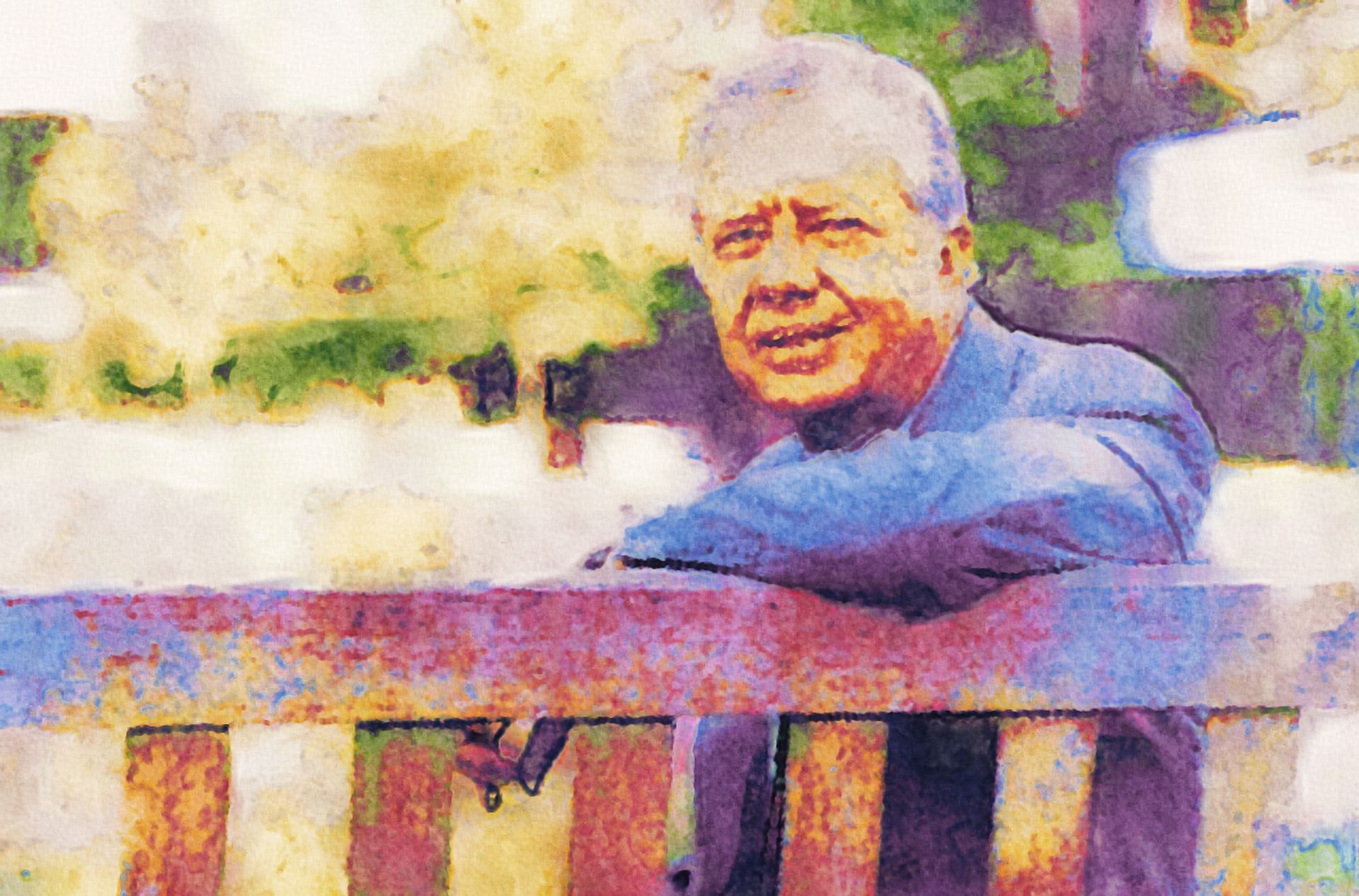
As leaders, we are often faced with decisions that test our values, integrity, and resolve. Today, as the world honors Jimmy Carter, we find ourselves standing on the brink of profound societal change stemming from a lack of moral courage in leadership. In the looming shadow of the incoming Trump administration, with its blatant disregard for moral responsibility, Carter’s life and legacy stand in stark contrast to the divisive and self-serving dynamics that dominate much of our current leadership landscape. Carter’s unwavering commitment to principle, humanity, and justice stands as a beacon for what leadership can and should be.
Carter’s presidency wasn’t perfect, but his post-presidency was extraordinary, defined by a moral courage that transcended politics. From building homes for the unhoused through Habitat for Humanity and his unrelenting efforts to eradicate global diseases like Guinea worm, to advocating for the rights of the oppressed as he did for the people of Palestine, Carter’s leadership was rooted in actions that prioritized collective well-being over individual gain.
Though faith served as his North Star, Carter was a staunch advocate for the separation of church and state, grounding his actions in universal values like kindness, fairness, peace, freedom, compassion, and human dignity, rather than a particular religion or dogma. For him, faith wasn’t about imposing his beliefs on others—it was about acting with humility, integrity, conviction, and a steadfast commitment to doing what was right over what was easy, even at personal cost.
Unfortunately leadership rooted in moral courage feels like the exception rather than the norm these days. Too often, we see positions of influence occupied by individuals who prioritize personal gain, wield misinformation, and perpetuate division to consolidate power, while demonstrating little to no regard for people or the planet. This approach—whether ending fact-checking on social media platforms or exploiting technological advancements to sow discord—erodes trust, destabilizes communities, and undermines our shared humanity. These actions are not only attacks on democracy but also global threats with ripple effects we have yet to fully comprehend, as never before in history have we been so interconnected through technology.
Leadership devoid of moral courage isn’t true leadership—it’s self-interest disguised as authority and power. Opportunistic alliances rooted in selfish motives and oppressive practices are inherently fragile because, when individual agendas clash—as they inevitably do—they collapse under their own weight. History has shown time and time again that unchecked greed and power ultimately lead to downfall. While individuals may temporarily collaborate to amass influence, their lack of moral courage eventually turns them against one another, as greed skews perceptions and fuels their insatiable appetites for more influence, more wealth—more of everything.
And it’s not just within the realms of billionaires and politicians. This same dynamic is found at the systemic and organizational levels, where a lack of moral courage fosters toxic cultures, short-sighted decision-making, and a disregard for long-term consequences. Organizations that prioritize profits and productivity over people, sideline ethical concerns for expediency, operate without transparency, or create environments driven by fear and competition often find themselves mired in scandal, internal dysfunction, or public distrust, ultimately resulting in organizational trauma. These systemic failures mirror the behaviors of self-serving leaders, perpetuating cycles of harm and instability that erode trust, weaken the organization’s foundation, and jeopardize the sustainability of its mission.
By contrast, moral courage endures because it builds trust, strengthens communities, and lays the groundwork for meaningful progress. To be clear—moral courage doesn’t require a particular title or rank—it requires choosing what is right over what is easy, even when we’re faced with risk or discomfort. Whether you believe in karma, divine justice, or the balancing forces of the universe, history has shown us that the arc of the moral universe, though long, ultimately bends toward justice. This belief in justice isn’t naive; it’s a recognition that leadership rooted in moral courage creates the conditions for healing and growth, even if the rewards aren’t immediately visible.
Carter’s legacy reminds us of the kind of leaders—really the kind of humans—we need now more than ever: those who act not out of self-interest but for the greater good. Leadership isn’t about accumulating power or wealth; it’s about using our positions to uplift others, foster belonging, and create a better future. Carter didn’t just talk about values; he lived them, often at great personal cost. Through his actions he taught us that hope isn’t passive; it’s a practice—a deliberate choice to believe in the possibility of a better world, and to act accordingly.
Moral courage begins with us. It’s the willingness to speak truth to power, resist complacency, and demand better—not only from others but also from ourselves. And while the challenges of rising authoritarianism, rampant misinformation, and global instability can feel overwhelming, they also offer opportunities to exercise moral courage. The decisions we make today will echo for generations, shaping the kind of world we leave behind. By rooting our actions in community, empathy, compassion, and integrity, we have the capacity to rise above the forces of greed and division that define the era of uncertainty we’re about to enter.
Jimmy Carter’s legacy reminds us of what is possible when choose moral courage to guide our thoughts and actions as leaders—and as humans. By practicing hope, embodying the conviction to fight for truth and justice, and committing to doing what is right over what is easy, we honor Carter’s legacy and uphold the timeless values that have sustained humanity through its darkest times. Leadership guided by moral courage isn’t just a choice; it’s an imperative—for ourselves, our communities, and the future we strive to create.
Written by

subscribe
subscribe to receive new pieces as they're written







Member discussion