
DIY your way to clarity + renewal
the /rōoted/ leader # 21 - on slowing down, tuning in, and creating profound shifts from the comfort of your home
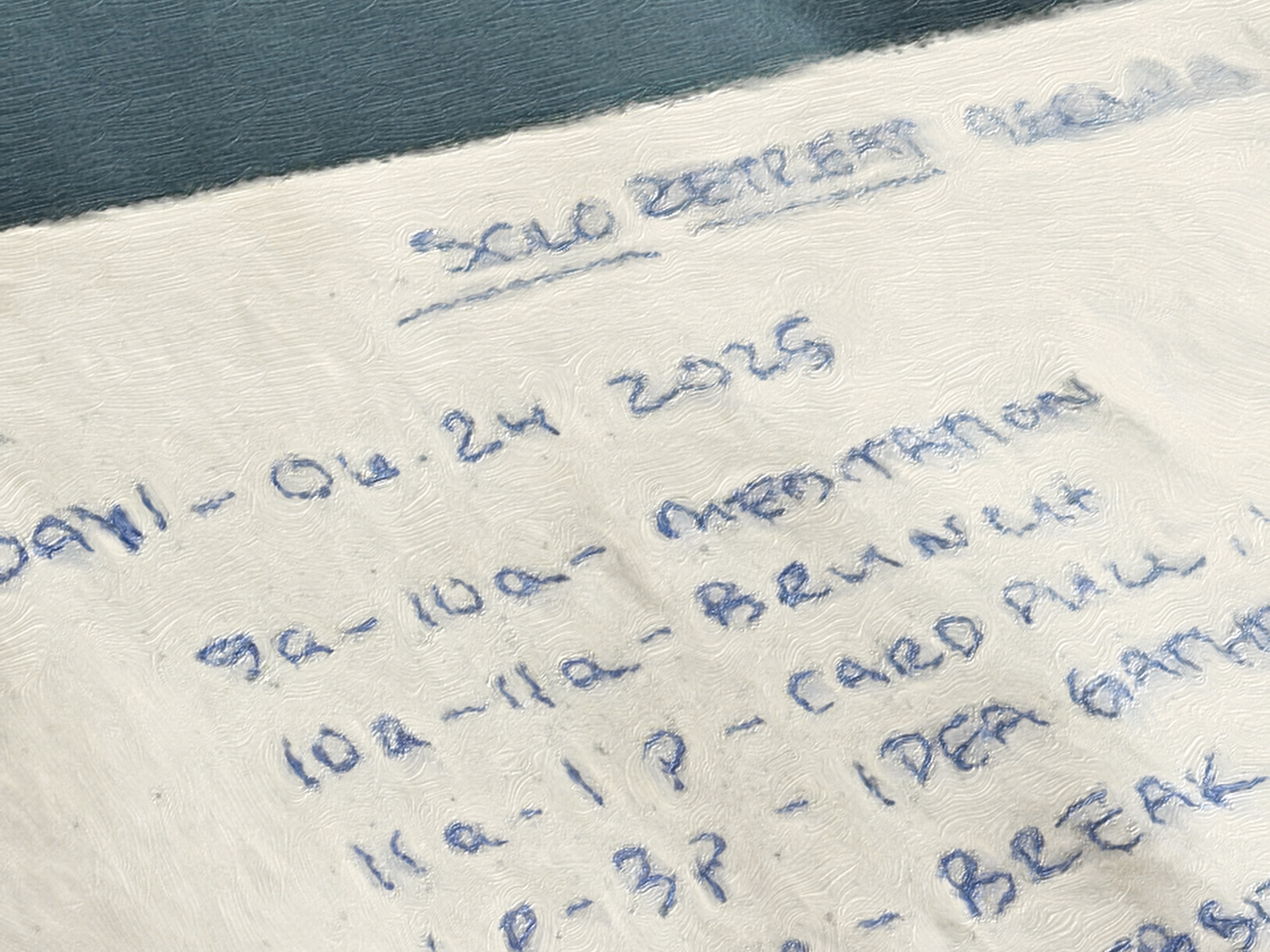
Earlier this week, I shared a piece about my own recent experience of creating an at-home retreat as I navigate a transition. I heard from many people who reached out to say the essay resonated, and asked for more practical guidance on how to actually do this for themselves. With this in mind, I thought it might be useful to offer a companion piece with some considerations for DIYing your own at-home retreat experience.
In our culture, we've inherited stories that tell us transformation requires expensive retreats, exotic locations, or complete life overhauls. But some of our most profound shifts happen in the quiet spaces between our everyday moments, in the gentle returning to practices that ground us in who we are beneath all the doing.
Many of us are currently navigating personal or professional transitions, but it can feel jarring to stand in these liminal spaces. Though we may be hungry for an intentional pause, we may push that feeling aside because it feels like a luxury or indulgence in the face of what’s happening in our country right now. But I think it’s because of what’s happening, and the thresholds many of us are standing at, that taking time now to tune into our own intuition matters more than ever. To make sure whatever we're doing walks the line between meeting our practical needs and keeping us connected to our purpose. To envision what service might look like in this new space. To make choices about future actions from a place of intention rather than fear.
There's a lot of noise in general. In addition to a cacophony of shoulds about what, when and how to move forward, many of us are also holding the pain and suffering of others. An at-home retreat isn't about escaping the realities of our life; it's about creating space within it to listen to what wants to emerge. It's about recognizing that our home can hold the same sacred potential as any mountain monastery or coastal retreat center—if we approach it with intention and reverence.
For those of us who work in service to others, especially those navigating vicarious trauma, moral injury, and institutional betrayal, these intentional pauses aren't a luxury – they're a necessity. They're how we tend to our own wells so we can continue to offer from a place of fullness rather than depletion.
5 considerations for a DIY at-home retreat
1. create supportive accountability
Start by choosing a period that feels both manageable and meaningful. This might be a full weekend, a single day, or even just a few hours. The key is to treat this time as inviolable. Turn off notifications, let people know you're unavailable, and resist the urge to "just quickly check" email or social media. If you have a partner or kids, consider letting them know what you’re doing, and more importantly why. While everyone’s situation is different, sometimes sharing why this time is important to you and what you need from the people around not only creates supportive accountability, but it models this practice for others around you and encourages them to engage in the practice, too.
In addition to boundaries, it’s important to engage in a simple ritual to mark the beginning of your retreat. Light a candle, take three deep breaths, or speak an intention aloud. For me, my ritual was a 30 minute meditation followed by making myself a beautiful brunch each morning—something special that I'd normally enjoy on a special occasion—in this case waffles with fresh strawberries and cream. While it may be tempting to skip this step, it’s important to remember that ritual is an important aspect of retreat that isn't about performance, but about signaling to your nervous system that you're shifting into a different way of being.
2. curate your environment + gather your supplies
Your home likely holds the accumulated energy of your daily life—often a sense of frenzied buzz and the endless mental loops of productivity. Taking time to shift this energy before you begin helps to create the conditions for deeper exploration.
This doesn't require a complete overhaul. Sometimes it's as simple as clearing a table, bringing in a plant or some fresh flowers, or playing music that helps you drop into a different rhythm. Consider what supports your particular nervous system—some people need complete silence; others find background music helps them get into the right frame of mind. (My tastes are pretty eclectic, but if you need some inspiration, here’s a link to my retreat playlist.)
Just as important as creating the right atmosphere is having materials ready to support whatever wants to emerge. For my recent retreat, I used a notebook and a large whiteboard with post-it notes. In the past, when I've facilitated this process with teams, I've given everyone large artist sketch pads and markers and used an empty wall or window for posting ideas and planning.
The key is having creative supplies within reach so you don't lose momentum when inspiration strikes. There's nothing more frustrating than having a breakthrough moment and then scrambling around looking for something to capture it with. Consider having on hand: paper (various sizes), colored pens or markers, post-it notes, a journal or notebook, maybe even some art supplies if that calls to you.
3. design a rhythm—not a schedule
This is where many well-intentioned retreat plans go sideways. Instead of creating a rigid schedule that mimics your everyday life, design a rhythm that honors both structure and spaciousness.
I like to plan three anchor points for each day: a morning practice, a midday pause, and an evening reflection. Everything else can unfold organically. The rhythm holds you without constraining you.
For me, in addition to waking up when my body was ready, I also spent time reading James Baldwin's No Name in the Street for inspiration for my work around sacred resistance. I took walks in nature and I started each morning in silence as I meditated, followed by 15 minutes of free writing to clear my brain of the cobwebs that need clearing before you can tap into the good stuff.
Make sure each day includes practices that nourish your mind, body, and spirit. This might look like reading something or listening to a podcast that feeds your intellect, moving your body in ways that feel good, and creating space for whatever spiritual practices ground you. Instead of balance, try to envision harmony—not perfect or equal—just intentional.
Consider incorporating practices that connect you to the more-than-human world—time outside, tending plants, or simply sitting by a window and watching how light moves through your space. While it may not be for everyone, for many indigenous and traditional cultures, finding ways to connect with our ancestors or people who came before us, can be powerful and supportive. Whatever feels good to you, just know that these moments of connection can be profoundly healing and transformative for souls carrying the weight of human suffering.
4. practice deep listening through uncensored writing
Retreat time offers us the rare opportunity to connect with our intuition—the voice that often gets drowned out by the constant noise of daily life. One of the most powerful ways I've found to access this deeper wisdom is through writing without judgment or censoring.
This practice is inspired by Julia Cameron's "morning pages" from The Artist's Way – the idea of writing three pages of stream-of-consciousness first thing in the morning. But you can adapt this to whatever rhythm works for you during your retreat.
The key is to write without editing, without trying to make it profound or meaningful. Often it's in these moments of letting everything flow onto the page—the complaints, the grocery lists, the random thoughts—that our deepest wisdom begins to emerge. It's like clearing all the surface noise to make space for what's underneath.
Don't worry about writing anything good or important. Just write. Let yourself ramble, repeat things, contradict yourself. This isn't about creating anything for anyone else – it's about creating awareness of our inner monologue and clearing space for our deeper inner knowledge to surface.
5. honor the integration
What happens during a retreat is important, but it's how you carry the insights and renewed energy back into your daily life that leads to on-going transformation. Before you officially end your retreat, take time to reflect on what you've learned about yourself and what you want to carry forward.
Consider writing yourself a letter describing how it felt to move through your days with more spaciousness and intention. When you return to your regular schedule, you can read it as a reminder of what's possible.
Think about one small practice you can continue—maybe a few minutes of stillness, 10 minutes of morning pages, an evening walk, or simply pausing to take three conscious breaths between activities. These aren't about adding more to your to-do list; they're about weaving the energy of the retreat into the fabric of your everyday life.
a note on guilt and indulgence
Taking time out for ourselves to engage in this type of introspection may raise feelings of guilt or indulgence, especially for those of us conditioned to prioritize service to others above our own needs. These feelings are understandable – and they're also worth examining.
The truth is, the quality of our service to others is directly connected to our relationship with ourselves. When we create space to listen to our own wisdom, to tend to our own renewal, we're not being selfish—we're ensuring that what we offer comes from a place of fullness rather than depletion. This kind of self-tending isn't separate from our service; it's an essential part of it.
Creating sacred space at home reminds us that transformation doesn't require dramatic departure from our lives. Sometimes the most profound shifts happen when we stop long enough to notice what's already here, and to tend to our own renewal with the same care we offer to others.
Our home, our life, our ordinary moments—all of it holds the potential for the sacred. The only requirement is that we show up to it with intention, presence, and the radical act of caring for ourselves with the same tenderness we often find easier to offer to others.
What else would you add to this list of considerations for an at-home retreat?
tell me my story is now available as an audiobook!
I’m honored to share that the audiobook version of Tell Me My Story: Challenging the Narrative of Service Before Self is now available. If you or someone you love has struggled with what it means to serve without sacrificing your well-being, this book is for you. Part memoir, part manifesto, and 100% my heart. If you listen and find something that resonates, please drop me a line, or better yet, please consider leaving a review. Every review helps indie authors like me reach more people. You can read more about my experience with recording the book here and find links to get the audiobook below.
Written by

subscribe
subscribe to receive new pieces as they're written









Member discussion