welcome to / rōot / by dimple dhabalia
essays, poetry, and art exploring questions of spirituality, morality, and belonging through the lens of spiritual ecology.
The 2024 election marked a turning point for me, ushering in what I’ve come to recognize as my era of divine rage. It was a moment of rupture when cruelty and injustice were no longer hidden or subtle—they were out in the open, flagrantly sanctioned, normalized, and even celebrated by many. Years of systemic harm and relentless oppression had been laid bare for all to see.
As a brown woman and the daughter of immigrants, I’ve experienced my fair share of othering and exclusion. But the intensity of my rage in this moment feels different—bold, uninhibited, and at times terrifying. Compounded by the lingering effects of the pandemic, unprocessed grief, systemic injustices, and the assaults on our bodies and identities, this moment has left me, and so many others, trying to find our footing on ground that feels like it’s constantly shifting beneath us, as the very foundation of what we once trusted breaks apart.
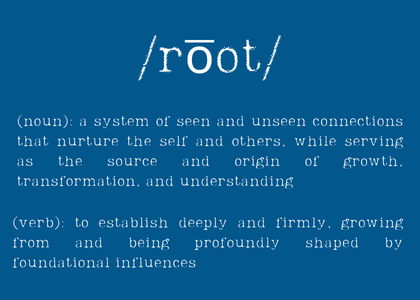
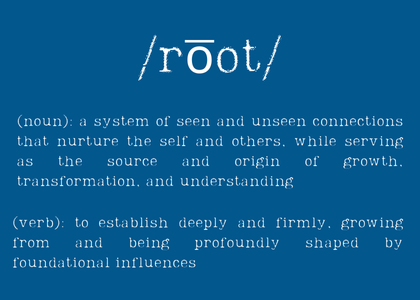
Amid this instability, I’ve started to see rage not just as a destructive force but as a sacred and transformative one. Sitting with its raw energy, I’ve realized that to fully understand its potential, we must root ourselves in it—pausing, listening, and allowing it to reveal the truths and lessons it holds about what matters most. This practice has led me to reflect deeply on the concept of rooting itself, a cornerstone of my mindfulness practice, symbolizing unwavering strength, stability, and presence amidst life’s ever-changing conditions.
This past summer, I took a plant-based storytelling class focused on botanical approaches to creative documentary and spiritual ecology, which fundamentally shifted how I see the world and my place in it. It invited me to look at plants not as static resources but as dynamic, living beings intertwined with our histories and futures. For centuries, many cultures understood the sacred value of trees and plants, seeing them as sources of nourishment, healing, and connection. In contrast, colonial systems commodified these beings, valuing trees more in death—as lumber—than in life. This disconnection from the living world mirrors the disconnection many of us feel today: from the earth, from one another, and from our own humanity.
As I’ve been reflecting on the word “root” itself, I’ve found that it carries a compelling duality. Roots can be a source of nourishment and connection, and also the origins of our pain and suffering. In nature, disturbances—whether storms, fires, or floods—disrupt landscapes, opening space for both destruction and renewal. Like the maple tree in my yard shedding its fiery leaves, these disturbances remind us that what appears as loss is often just one chapter in a much longer story. Similarly, this moment in our collective history is not the entire story; even in the face of destruction, we have the agency to choose what to nourish, what to prune, and what to uproot entirely to create space for something new to grow.
It’s time to go underground. Stealth care . . . Tend the communities of people who are making new paths. Make music. Restore waters and soil . . . Time to get to work in ways that are not ensnared in polarized politics. Unseen and unnoticed acts of generosity and triage are needed.
- Nora Bateson
Rooting is also deeply connected to my work on moral injury and moral resilience. Moral injury occurs when our deeply held values are betrayed, often by systems or structures we trust, leaving us fractured, disoriented, and searching for meaning. In this moment of rupture, I see so many of us grappling with these fractures—questioning how to survive in entrenched systems of domination, injustice, and supremacy that seem determined to strip us of our humanity. Rooting, in this context, becomes an act of both resistance and repair. Like the unseen root systems in a forest that send nourishment to an injured tree to support its recovery, rooting allows us to ground ourselves in shared humanity, rebuild our integrity, and foster resilience, even in the face of relentless harm.
This awareness is the inspiration for /rōot/, an experimental project that weaves together creative documentary, spiritual ecology, and storytelling to explore rooting as an act of resistance, healing, and community building. Traditional documentary storytelling often focuses on convincing audiences of an argument or agenda. Creative documentary, by contrast, uses a variety of artistic mediums to invite subjectivity, imagination, and reflection, creating space for audiences to engage with a story in their own way.
Through essays, poetry, short films, and art, /rōot/ aims to explore the layers of our collective rage and the tensions between grounding and letting go. It’s about planting seeds of reflection, resistance, and hope, while creating brave spaces for dialogue. Spaces where we can share stories of resistance, pain, and transformation to spark curiosity, connection, and healing. Spaces that provide a refuge for us to process our experiences and expand our understanding of ourselves and one another.
As Nora Bateson so beautifully wrote the day after the elections, “It’s time to go underground. Stealth care . . . Tend the communities of people who are making new paths. Make music. Restore waters and soil . . . Time to get to work in ways that are not ensnared in polarized politics. Unseen and unnoticed acts of generosity and triage are needed.” /rōot/ is my experiment in going underground—to create spaces of unseen care and quiet resistance where healing and transformation can take place.
I don’t know what the seeds I plant will grow into, but the act of planting them feels sacred at this moment. In the meantime I’m staying open to whatever unfolds, and choosing to remember that it’s within moments of rupture that we often find seeds of possibility.