
to die before we die
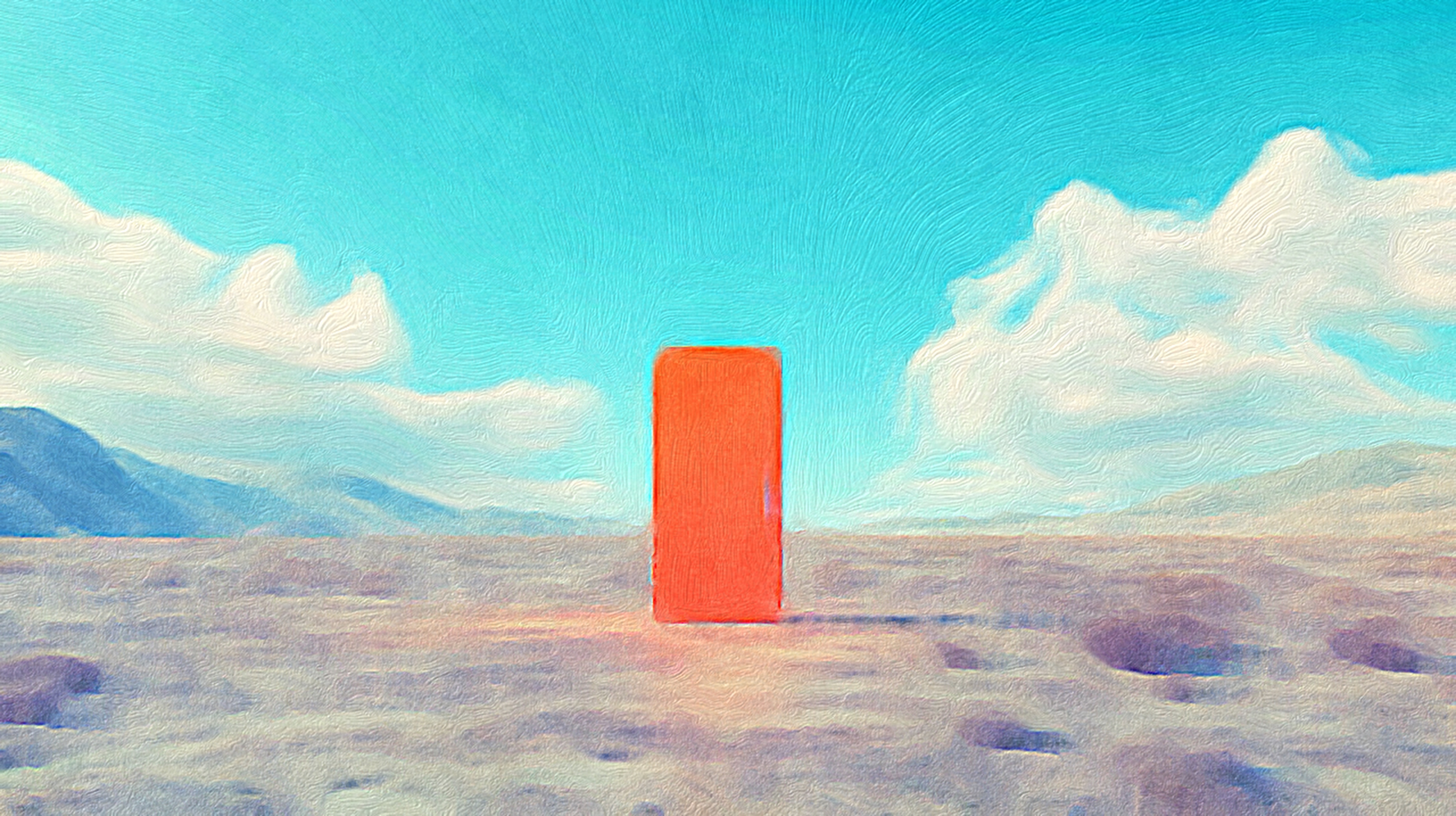
“We face many little deaths in our lifetime—a friendship ends, a business venture folds, or the inevitable changes we encounter in our aging body… Every initiation brings one to the precipice of death. In fact, there is no genuine experience of initiation without an encounter with death. By dying before we die, we are able to accept this act and embrace this amazing chance we have to be alive.”
— Francis Weller | The Wild Edge of Sorrow
I don't know if it's the fact that both my parents have passed away, or I'm getting older, or a combination of the two, but I spend a lot of time thinking about death.
Last Friday marked six years since my mom's passing. As anniversaries often do, it stirred a quiet undercurrent of grief—not the sharp, disorienting grief of the first year, but the kind that hums just beneath the surface. The kind of grief you carry with you, even when you're not speaking its name. Over the past few weeks, I found myself reflecting not just on her death, but on the way grief and loss keep remaking us long after the funeral is over and we begin moving on with life again.
It was in that space that I came across a passage from Francis Weller's The Wild Edge of Sorrow—words I've read before but heard differently this time. Weller writes:
"We face many little deaths in our lifetime—a friendship ends, a business venture folds, or the inevitable changes we encounter in our aging body… Every initiation brings one to the precipice of death. In fact, there is no genuine experience of initiation without an encounter with death. By dying before we die, we are able to accept this act and embrace this amazing chance we have to be alive."
I haven't been able to stop thinking about this passage, especially as I reflect on how much of my work—and my life—keeps circling back to the spaces in between, the thresholds we cross without even realizing it.
We've been conditioned to think of death as a singular event—a moment at the end of life. But Weller's words are a beautiful reminder that death is an essential part of living. It's woven into every transition, every ending, every moment of surrender we experience along the way. It's a part of the roles we outgrow, the relationships that shift, and the stories that no longer fit.
And every little death leads us to the edge of a new threshold.
Our ancestors understood this. Across cultures and traditions, rites of passage were created to honor the truth that every significant change—birth, adulthood, marriage, elderhood, loss—requires a kind of death. A shedding of the old before we can step into what's next. These rituals weren't meant to erase the grief or the uncertainty, but to give shape to them. They created a space to grieve, to celebrate, and to witness as someone crossed over into a new way of being.
Over time, we've lost our connection to these rituals. And while I don't believe every ending or transition needs a formal ceremony, I do think we've lost something vital in forgetting how to notice them at all.
How often do we experience a shift without pausing to acknowledge what's fallen away? A breakup—personal, professional, or platonic. A loss of title, job, or role. A chapter that quietly closes. How often do we stop to reflect on the beauty those experiences brought? The lessons they offered. The joy or meaning they gave us while they lasted. Or how that season of life shaped who we are now, as we prepare to cross another threshold?
In a culture that diminishes the value of stillness, we've been taught to rush past the ache of uncertainty. Instead of allowing space for both grief and gratitude to rise and coexist, we power through change—rarely pausing to consider how a particular experience, relationship, or way of being has marked us, for better or for worse.
But these little deaths aren't happening in isolation. We're also witnessing them collectively—though some of them don't feel so little. The systems we were told would guarantee safety, liberty, justice, and belonging for all are now crumbling under the weight of authoritarianism. The cracks in our healthcare and economic structures—exposed during the pandemic—continue to widen. Longstanding myths about democracy, meritocracy, and progress are being called into question.
And beneath it all, deeper patterns shaped by imperialism, colonialism, and capitalism—patterns of exploitation and dehumanization—are finally being named and acknowledged for what they are, and have always been: tools of oppression and division.
In moments like this, when hopelessness creeps in and spreads its tendrils across the landscape, it's easy to believe that what we're witnessing is nothing but collapse. And in many ways, it is. But these moments are also initiations—thresholds we're crossing together, even if we can't yet see where they lead. Initiations with the power to move us away from ways of being that were never meant to sustain us—and toward ways of living our ancestors knew well: ways rooted in care, in interdependence, in the quiet knowing that every ending, no matter how painful, makes space for something new to begin.
Of course, it's easier to see the meaning of these initiations in hindsight—once we've crossed the threshold and begun to make sense of what changed. It's much harder when we're in the thick of it, standing face-to-face with injustice or feeling the unsteady ground beneath our feet. The spaces between—the liminal spaces where the old stories are ending and the new ones haven't fully taken shape—are, by their nature, disorienting. There's no map, no script, no certainty to hold onto.
And maybe that's the point.
Death isn't something to be feared—it's always with us, woven into every change, every loss, every letting go. What if, instead of bracing against it, we surrendered and allowed it to open us up to living?
When we stop fearing the little deaths—the ones that ask us to release an old identity, lay down a familiar role, let go of a story we've outgrown—we start living more fully. In this space between what was and what is yet to be, we begin to soften. To open. To trust that every falling away is creating space for something we'll never be able to see if we keep looking back and clinging to what no longer exists.
To die before we die isn't about grief or sadness—it's about the joy and fullness of living. It's about giving in to the truth that life keeps remaking us. That every ending carries within it the quiet seed of becoming. And that if we're willing to notice, to honor, and to surrender, we might just find ourselves more alive than we ever imagined possible—not because we avoided death, but because we learned how to live alongside it.
a compassionate reframe
We tend to notice only the big endings—the ones marked by ceremony or public acknowledgment. But most of life's thresholds aren't formal. They come quietly, asking us to loosen our grip on who we've been and what we've known. Letting go isn't a sign of weakness or surrender to loss—it's a natural part of how we're shaped by time, by change, by living.
These small deaths aren't detours from life; they are life.
What matters isn't how we hold on, but how we pay attention—how we make space to notice the endings that are shaping us and trust that they are part of a much older rhythm we've simply forgotten how to name.
reflection prompts
I invite you to explore your own relationship with little deaths and transitions through these questions:
- Think of a specific transition from the past year—perhaps a friendship that shifted, a role that ended, or a belief you outgrew. What did you lose in that change, and what became possible because of it?
- Where in your life right now do you sense something ending or shifting, even if you can't name it clearly yet? What would it feel like to approach that uncertainty with curiosity rather than resistance?
- How might you create a small ritual or practice to honor the next ending you encounter—something that allows you to acknowledge both what you're releasing and what you're welcoming?
one final thought
Life doesn't unfold in straight lines or clean chapters. It moves in cycles of holding on and letting go, of becoming and releasing. The little deaths we experience aren't disruptions to that cycle—they're reminders of it. When we learn to notice them, we begin to see that letting go isn't an ending to fear, but a way life quietly makes space for something new.
in case you missed it . . .
Written by

subscribe
subscribe to receive new pieces as they're written





Member discussion