
the theology of hunger
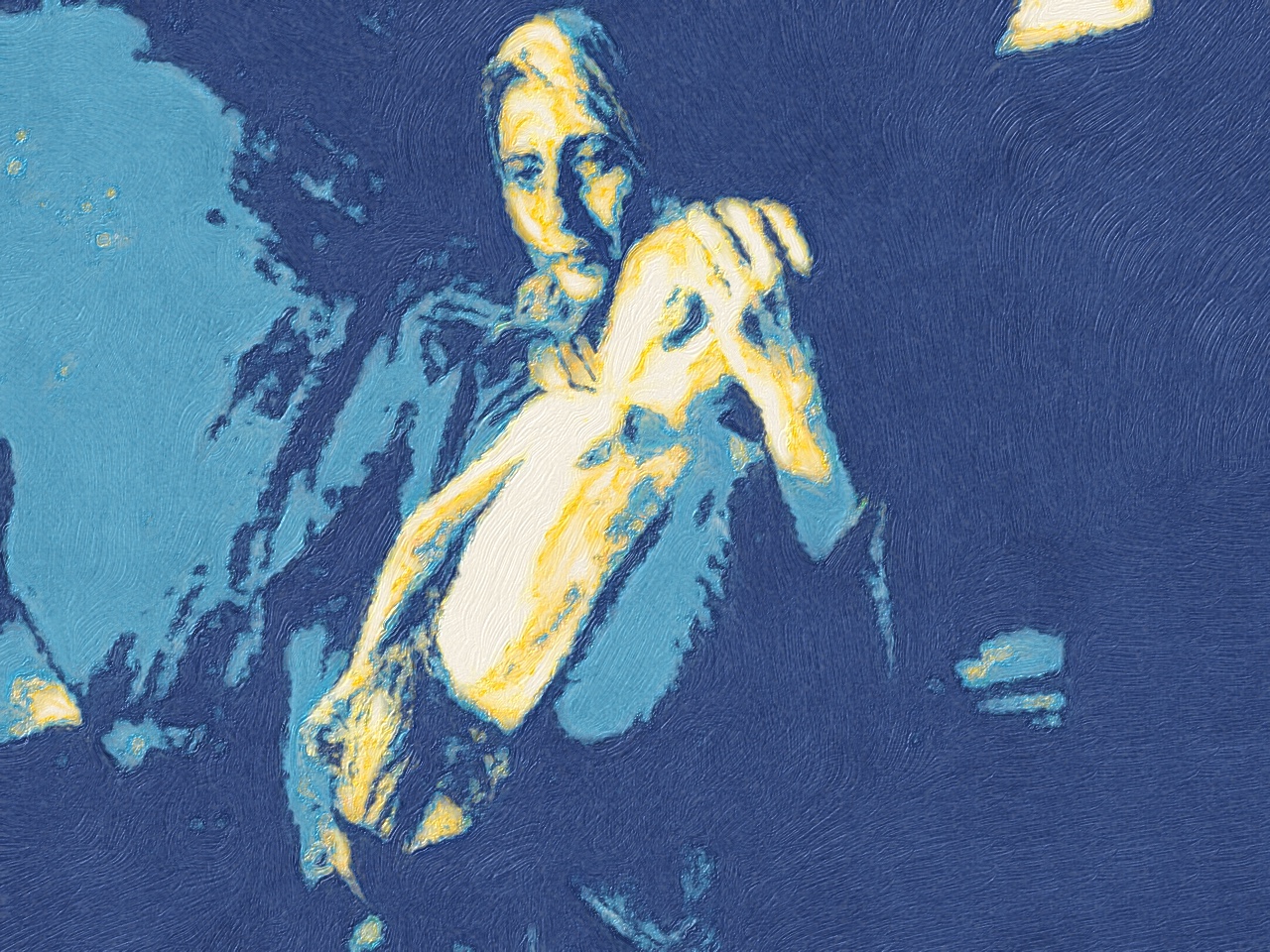
Over the past few weeks, my social media feeds have been inundated with pictures of children in Gaza. Not images of pudgy babies with rosy, cherubic cheeks, but mini skeletons covered in grayish skin, spines protruding, cheeks hollow, eyes sunken—lying listlessly in their mother’s arms, if they’re among the few who still have mothers.
As much as I want to look away, I can't. All I can think about is hunger. Visceral. Primal. Fatal.
One of my earliest core memories is from when I was around two years old. It might be something I’ve constructed from stories and photographs, but when I close my eyes, I can see it clearly. We're in our new house in Denver. There's no furniture yet, and every Indian family in town is gathered in our unfinished basement. They sit cross-legged on newspapers spread across the cement floor, styrofoam plates filled with fragrant curries, hand-rolled bread, and rice—contents of the feast my twenty-two-year-old mother prepared to celebrate the blessing of our home.
In the center of the circle, my dad holds court, a large pot of pillowy brown gulab jamun swimming in syrup infused with saffron, cardamom, and rose cradled in his arms. I hold on to his pant leg, a two foot shadow following him as he makes his way around the circle, gently placing a gulab jamun into each person's mouth. Eye to eye. Hand to mouth. Heart connecting with heart. Almost 48 years later, I can still hear the laughter and feel the joy of that moment.
What I’ve been thinking about lately is how my parents’ act of feeding others that day—and for years after—was more than hospitality. It was ceremony. Communion. A way of honoring their guests by letting them know: you matter, you belong, we are connected.
They weren’t alone in that belief. Across time and tradition, cultures have treated the act of feeding not just as sustenance but as sacred exchange. In my Hindu culture this idea is rooted in the practice of Anna Yoga—the yoga of food. From the Sanskrit word anna, meaning food or grain, Anna Yoga teaches that feeding others is a spiritual discipline, a form of union with the divine. To prepare food with love, to offer it with reverence, to serve it without expectation of anything in return. These aren’t acts of charity. They’re acts of devotion where hunger is as much about feeding our relationships as it is about filling our bellies.
To be clear, this isn’t about organized religion. It’s about what we choose to revere—and what we’re willing to protect as sacred.
African traditions rooted in Ubuntu—“I am because we are”—treated individual hunger as a communal imbalance. In Australian Aboriginal cultures, hunger signaled a need to reconnect with the land and its stories. Many ancient and Indigenous cultures understood this intuitively. Lakota teachings saw scarcity as the Earth’s way of calling for ceremony. These are just a few examples of traditions that understand a deeper meaning behind hunger that goes beyond the physical. Hunger is spiritual. It’s relational. And when it’s present, something in the moral fabric of our world is torn.
This is what I’ve come to think of as the theology of hunger—a moral framework rooted not in doctrine, but in reverence. One that sees hunger not as failure or punishment, but as invitation. A call to remember our interdependence. A call to repair what’s been torn. And it’s this perspective of hunger as sacred that makes what’s happening in Gaza feel so devastating.
Because what we’re witnessing isn’t famine. It’s not the result of a natural disaster or tragic misfortune. It’s strategic starvation stemming from the spiritual malnutrition of colonialism, imperialism, and supremacy culture.
A deliberate choice to deprive an entire population of food, water, medicine, and hope. Starvation that serves the interests of power. A tipping point in a genocide carried out not only with bombs and bullets, but with empty plates, dry wells and a judgment made by global powers that Palestinian lives are worth less than others.
And in this moment, it’s not just Gaza. It’s Sudan. South Sudan. Haiti. Nigeria. Mali. Yemen. The starvation in these places is the predictable result of policies designed to maintain control over resources and populations. The result of active ongoing imperial management that keeps these regions destabilized and dependent by manufacturing hunger and weaponizing it in full view of the world, knowing that consequences for the oppressors is unlikely.
But strategic starvation extends beyond food. It's the starvation of our morality. Of connection. Of lineage. Of story. Of the threads that connect past to future. Of the human capacity to hunger for anything beyond survival. When parents must choose between searching for water and staying to comfort their dying child, we’re witnessing the starvation of love itself.
This is strategic starvation in its most complete form: not just a tool to kill the body, but a weapon designed to annihilate the human spirit’s hunger for liberation.
Sadly, this tactic isn’t new. For centuries mass starvation and weaponized hunger have been used by colonizers and conquerors to break the will of those who couldn’t be broken by violence alone. A tactic of control—sanctioned, systematized, and steeped in racialized hierarchies. Those in power create scarcity, then justify it through narratives about the supposed unworthiness of those who suffer. Even when the land was shared freely, even when Indigenous peoples welcomed strangers to their tables, their gifts weren’t met with gratitude, but with extraction. Exploitation. Death. From the Trail of Tears to Bengal to Gaza, hunger has always been part of the blueprint, and the lives lost are viewed as collateral damage in the larger imperial narrative.
Despite assurances of “never again” after each atrocity, we continue to witness these acts over and over again. It seems to be easier for many in our society to accept the justification that these strategies are political decisions instead of acknowledging them for what they are—spiritual violations.
To allow politicians, faith leaders, and the media to twist the sacred into something that justifies cruelty, turning theology into a tool of convenience and control for those with privilege.
Here in the West, in addition to the abundance of food that satisfies the hunger in our bellies, we’ve also been fed a steady diet of lies to make mass starvation of others more palatable. We’ve watched the media give more air time to the infidelity of a CEO laid bare at a concert than the news that the U.S. government chose to incinerate 500 metric tons of emergency food that expired—enough to feed 1.5 million children for a week—even after the World Food Programme had offered to distribute it months before.
What we’re witnessing isn’t tragic misfortune. It’s not just the choices of those in power—it’s the decision of each person who chooses to look away. We may not have built these systems—but when we remain silent in the face of suffering, our silence becomes its own kind of sacrament. Not a holy one. A hollow one. One that helps consecrate the very systems, structures, and outcomes we claim to oppose.
This silence creates space for others to use faith to justify cruelty, making it seem like the failure is in the divine. But it’s not. The failure is in us.
Because to be human is to hunger.
And to deny that hunger—whether for food, for dignity, for justice, for joy—is to desecrate the divine. It’s a declaration rooted in judgement about the value of life. That the hunger of certain people doesn’t matter. That the lives of some children are worth less than others.
But I refuse to accept that.
Nourishment takes many forms. We don't have to starve ourselves of joy to honor another’s suffering—but we do have to choose not to look away. We have to choose to make our joy more expansive, rooted in care rather than escape. We have to make the choice to engage—to feel, to feed, to speak out—all practices rooted in nourishment and acts of sacred resistance. They remind us that in the face of atrocity, we all possess the capacity to nourish others, and the agency to choose connection over numbness and presence over despair.
This is why I keep returning to the theology of hunger—not as dogma, but as a moral compass. A call to remember what our traditions actually ask of us. There is no religion, culture, or tradition I could find that blesses the slow death of children. No scripture that says: feed only those who align with your politics. No prophet who taught that the comfort and security of one justifies starvation of the other.
The theology of hunger is the understanding that when we feed and nourish one another, the invisible threads of connection become more visible. That belonging is our inherent right as human beings. That when we allow for mass starvation—whether in body, mind, or spirit—we become complicit in a form of violence that goes beyond politics and contributes to the unraveling of our humanity. Because without practices to feed, to grieve, to rage, to serve—we remain spiritually malnourished. Stuck in complicity. Hollowed out by convenience.
Gaza may be located across the ocean, but the pain and suffering of its people isn’t separate from us. It’s not abstract. It’s raging. And if we don’t let it break our hearts—if we don’t let it pierce our prayers and disrupt our complacency—then we’re starving something sacred in ourselves.
The simple, radical truth that every life is worthy. Of love. Of joy. Of belonging. Of having their hunger fed.
a compassionate reframe
Hunger has rarely ever been just about food. It reveals the stories we’ve internalized about worthiness, suffering, and belonging. The theology of hunger asks us not simply to feed, but to reckon—with our distance, our silence, our complicity.
This isn’t about guilt. It’s about returning to right relationship.
To refuse the acceptance of strategic starvation is to reclaim something deeper than morality—it’s one step towards reorienting our lives toward reverence and choosing to ensure that every act of feeding becomes a small defiance, a sacred disruption, a refusal to let violence have the final word. The hunger of others isn’t separate from our own. It is a call to remember who we are to one another—and to become the kind of people who respond with love and compassion.
reflection prompts
- How does understanding hunger as spiritual rather than merely physical shift your relationship to your own needs—and to the needs of those around you?
- Where do you notice the “hollow sacraments” of silence and complicity showing up in your life or community? What would it mean to replace them with practices that feed rather than starve the sacred?
- What forms of hunger beyond food do you recognize in yourself, your relationships, or your community? How might feeding those hungers become a form of spiritual practice?
- How does connecting Palestinian children’s hunger for life to your own hunger for meaning change your understanding of what spiritual practice requires of you?
one final thought
The theology of hunger doesn’t have to end with sorrow. But it does ask something of us. Not just to witness, but to respond. To become keepers of one another’s fullness—not as saviors, but as kin. If we are to reclaim what is sacred, we must become people who tend to hunger at every level, and ask who is being starved, what is being stolen, and how we might live differently?
Because in a world where starvation is strategy, to feed, to see, to grieve, to act—is no small thing. It is the beginning of repair.
Written by

subscribe
subscribe to receive new pieces as they're written







Member discussion