
at the threshold
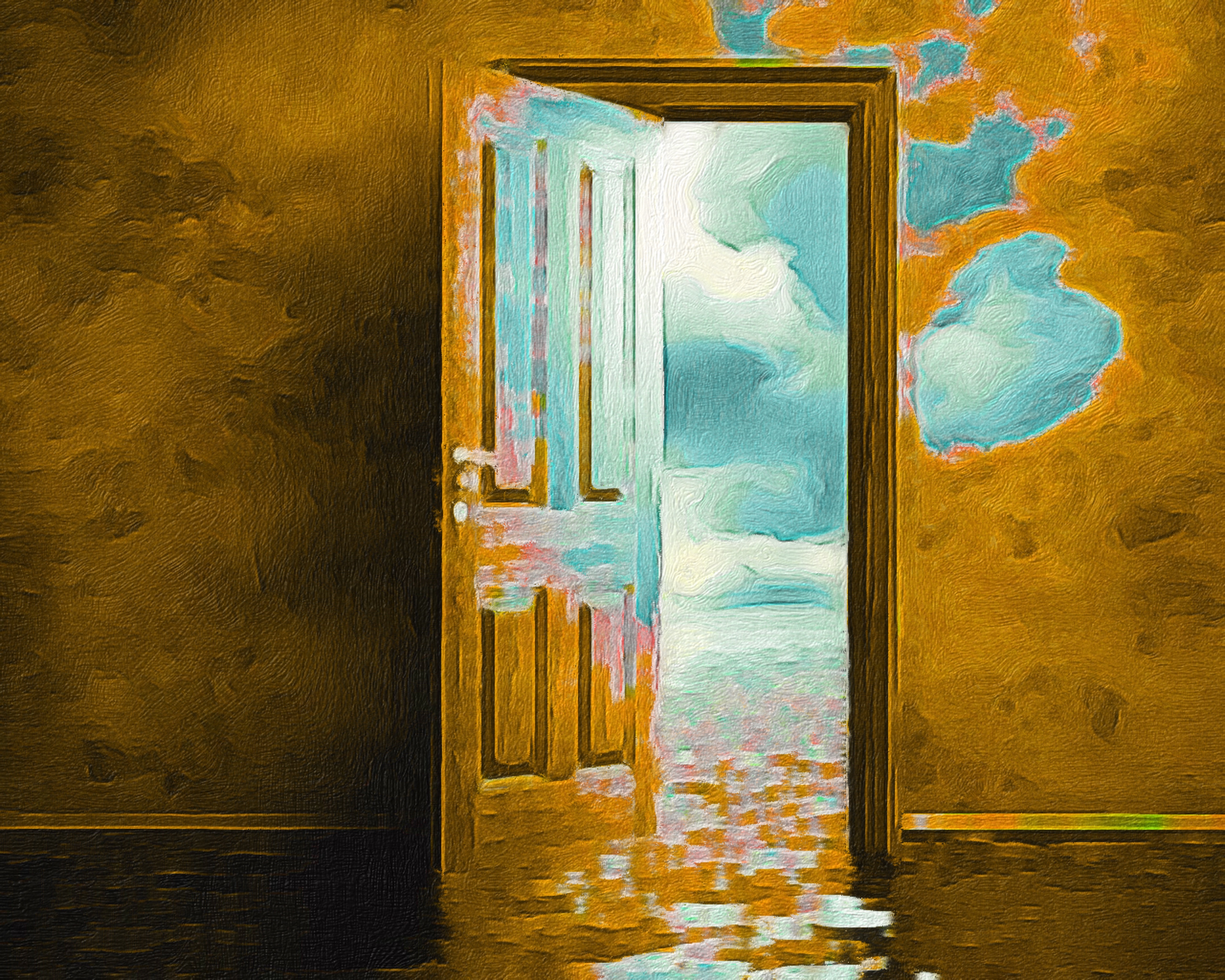
Lately, I’ve been thinking a lot about liminal spaces.
It feels like we’re living in one all the time now—in this suspended reality between love and hate, trauma and healing, burnout and rest, extraction and resistance, seen and unseen. These thresholds are everywhere, and yet we rarely know how to be in them.
Liminal spaces are uncomfortable because they’re rooted in uncertainty. And uncertainty, as it turns out, is something we’re biologically hardwired to resist. It makes us feel unmoored, vulnerable, even scared. To make things harder, we’ve been conditioned to believe we should be able to control it—to find certainty, name it, and hold it in place.
But I don’t know if that’s true.
What I do believe is that we can root ourselves in uncertainty—not by bypassing it, but by learning how to stay with it. And when we do, we begin to see that liminal spaces aren’t just voids or holding patterns. They’re places of possibility.
We’ve been taught that the goal is to arrive.
At clarity. At stability. At some version of “finally”—where the hard parts are behind us and everything makes sense. We’re told that if we work hard enough, plan carefully enough, heal fast enough, love well enough—then we’ll land somewhere solid. Settled. Certain.
And so we chase it.
Through careers and callings. Through relationships and relocations. Through self-improvement and reinvention. We shape our lives around the pursuit of that elusive moment when we’ll finally feel grounded. Like we’ve made it. Like we’re whole.
But the truth is, most of life doesn’t unfold in the places we arrive.
It unfolds in the space between.
Between burnout and rest.
Between heartbreak and healing.
Between certainty and confusion.
Between what was and what’s next.
These are liminal spaces. And they’re everywhere.
Liminality shows up in the moments when the old story no longer fits, but the new one hasn't yet formed. When we’re shedding roles, identities, or beliefs that once gave us structure, but now feel too small. When something ends—a job, a relationship, a version of ourselves—and we’re left hovering in the unknown, unsure of how or when we’ll land again.
And because we’ve been taught to worship at the altar of progress, of power, of competition, of wealth, the in-between can feel lonely—like a kind of purgatory, an unwelcome pause that signals failure rather than becoming.
Instead of resting, healing, and opening ourselves to the quiet messages that can only be heard when the noise of the world falls away, we try to rush through these spaces.
We make quick decisions. Force answers. Treat discomfort as a problem to fix, rather than a signal to pause.
The emphasis on I over we—ingrained in us since childhood—leads many of us to retreat inward, convinced that no one else could possibly understand the pain or ambiguity we’re living through. But that loneliness is rarely the full truth. More often, it’s self-imposed—a product of shame, grief, or fear of being seen in the messy middle.
When we allow others into the liminal with us, something shifts. Our individual realities become shared experiences that form the roots of collective care. Through presence, witness, and joy, we begin to give ourselves—and those around us—permission to simply exist: unfinished, imperfect, and enough.
Nature has been modeling this form of care for generations.
When a tree is uprooted or wounded, it doesn’t heal alone. The forest responds with quiet support—mycelial networks carry messages and nutrients, nearby trees adjust their roots and canopies, the ecosystem shifts to protect and restore. The healing doesn’t happen outside the liminal space. It happens within it.
Liminal spaces aren’t something to be feared or avoided. They’re thresholds of possibility that lead us to what’s next. But before we cross, they provide space to just be.
To grieve what’s been lost.
To rest and recover.
To imagine what could be possible from here.
Instead of trying to push through them, imagine what might become possible if we slowed down with intention and stopped believing that life in the liminal is a sign that something is wrong.
What if we changed the narrative—so we could honor these spaces for what they truly are—sacred pauses between chapters. Open fields of possibility. The quiet places that connect what was to what can be.
a compassionate reframe
We’ve been taught to see liminal spaces as voids—empty, uncertain, unproductive.
But they’re none of these things. They’re thresholds of possibility. Bridges.
Not between failure and success, but between endings and new beginnings. They connect who we were with who we’re becoming.
And if we let them, they can become sacred ground for healing, integration, and transformation.
reflection prompts
As you move through your own seasons of in-between, I invite you to consider:
- Where in your life are you being invited to pause—even if it feels uncomfortable?
- What polarity are you currently holding—between grief and growth, confusion and clarity, loss and possibility?
- What might shift if you trusted the liminal space as a threshold, not a test?
- How would you show up differently if this space wasn’t something to rush through, but something to be in with care?
one final thought
The liminal isn’t the absence of life.
It’s where life quietly reshapes itself—
a fertile threshold where the next version of you is beginning to take root.
You don’t need to know exactly where you’re going to honor where you are.
You’re not failing.
You’re becoming.
Written by

subscribe
subscribe to receive new pieces as they're written






Member discussion